Anúncios
Have you noticed new, unexpected hits popping up on your queue and wondered how they broke through? The shake-up on big platforms — catalog cuts and merger purges — left gaps that small creators filled fast.
Platforms like Netflix and Max removed animated titles after corporate moves and tax write-offs. That vanishing act pushed fans toward creators who launched shows on YouTube and Newgrounds.
Creators such as Glitch Productions and viral hits like The Amazing Digital Circus proved a different path works: build fandom, fund episodes via Kickstarter or Patreon, then land licensing deals.
You get more variety and faster innovation because fans help decide what gets made next. This grassroots model changes how a show earns attention and how content reaches you.
The present-day shift: Why you’re seeing more indie shows in your queue
When big services cut catalogs, new shows found room to breathe and reach you directly. That gap helped small creators publish work where viewers already spend time, like YouTube and Newgrounds.
Streaming purges opened doors
Corporate write-offs and mergers removed thousands of animated titles. That mass removal freed space in recommendations and search results, making it easier for fresh series to surface.
Accessible tools and communities
Affordable software and shared assets let creators collaborate faster. Teams swap rigs, templates, and tutorials, cutting costs and speeding up episode delivery.
Fans fund what they want
Crowdfunding changes the financing game. Platforms like Kickstarter, Patreon, and merch sales let you directly support scenes, talent, and sound design. That funding model gives creators clear signals about which content to expand next.
- Publish on YouTube, gather watch-time, then reinvest.
- React to feedback and refine pacing quickly.
- Convert fan momentum into licensing opportunities.
| Industry Move | Immediate Effect | Creator Response |
|---|---|---|
| Catalog purge | Less competition in feeds | Upload to open platforms |
| Merger write-offs | Titles removed from streaming | Use crowdfunding for episodes |
| Fan momentum | Higher visibility | Negotiate licensing deals |
The indie series trend: what’s driving viewers and fans to these shows
You’re seeing more web-born hits because fans amplify what they love, fast and loud. The Amazing Digital Circus turned viral clips into an organized fandom. Fan animations, theory videos, and music remixes pushed viewers to sample the pilot and each new episode.
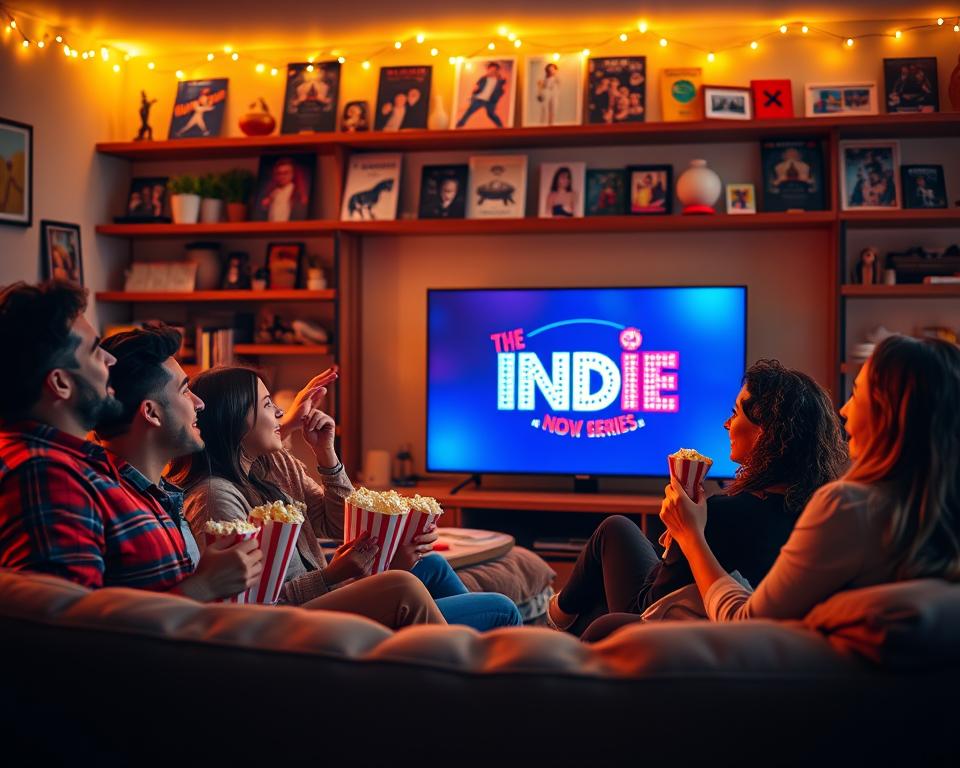
Case in point: The Amazing Digital Circus and a fast-growing fandom
Fan work became free promotion. That activity raised algorithm signals and led to a Netflix licensing deal that kept the show visible beyond YouTube.
YouTube-native creators and crowd-funded projects
Projects like Monkey Wrench and The Earth Guy rely on crowdfunding, comments, and merch to fund upgrades. Creators tweak pacing, jokes, and cameras based on direct feedback.
From web to platform: Glitch Productions and licensing
Glitch Productions built hits such as Sunset Paradise, Meta Runner, and Murder Drones. Their catalog shows how web-first success can turn into platform deals without losing original voice.
Style evolution episode by episode
Quality climbs with each release. Animation, lighting, and sound improve over time as creators reinvest audience support. You notice tighter edits, stronger hooks, and thumbnails that make you click and stay.
- Fan creations drive discovery and boost metrics.
- Crowdfunding validates arcs and funds upgrades.
- Licensing often rewards the original personality and style.
| Case | Fan Action | Outcome |
|---|---|---|
| The Amazing Digital Circus | Animations, explainers, music videos | Streaming license and wider reach |
| Monkey Wrench / The Earth Guy | Kickstarter, Patreon, comment-driven tweaks | Improved production and steady releases |
| Glitch Productions | Web catalog building and fan engagement | Platform deals without heavy notes |
Inside the creator playbook: how indie creators build a series your way
Many small teams stitch funding, volunteer time, and niche marketing into a plan that actually gets episodes finished. This practical mix is the backbone of how modern projects move from sketch to screen.
Financing the show: Kickstarter, Patreon, merch—and out-of-pocket grit
Creators commonly anchor budgets with crowdfunding, keep steady support via Patreon, and sell merch to boost margins. Personal savings and crew donations fill gaps when deadlines loom.
Distribution choices and community reach: from YouTube to wide syndication
Launch on YouTube or Newgrounds to prove demand, then pursue syndication or licensing once watch-time and retention show traction. Producer Chris Wiltz funded Semi-Dead out of pocket, used blip.tv to syndicate, and leaned on horror communities to build buzz.
- Release planning: set cadence—weekly, monthly, or batch drops—and use cliffhangers to keep viewers returning.
- Scale tactics: reinvest ad revenue and pledge surges into VO, music, and better renders.
- Community tools: roadmaps, BTS posts, and polls align content with what you want to watch.
| Funding | Distribution | Retention |
|---|---|---|
| Crowdfund + merch | YouTube → syndicate | Cadence + cliffhangers |
| Personal savings | blip.tv (historic) / platforms | Community engagement |
| Volunteer talent | Licensing when proven | Transparent roadmaps |
What this means for streaming, episodes, and you as a viewer
Creators are testing genre mashups and release patterns on open platforms to see what sticks with viewers. That experimentation makes your queue more varied and risk-taking content more accessible.
Semi-Dead mixed horror and comedy with monthly drops and a surprise finale. That approach showed platforms a clear path: proof online can turn into broader distribution without losing voice.
How release experiments and fan work reshape what you watch
You’ll see short seasons, weekly drops, and monthly releases coexist. Pick a listening pace that fits you: binge a run or follow episode-by-episode.
Your engagement—watch time, comments, shares—guides creators on pacing and style. Fan edits and AMVs stretch interest between releases and help new viewers find a show.
- Genre mashups: flexible storytelling attracts platform licensing after online proof.
- Release variety: choose cadence that suits your watching habits.
- Audience signals: your feedback shapes future episodes and production choices.
| What You See | Why It Happens | Benefit to You |
|---|---|---|
| Genre-blending titles | Creators mix styles to stand out | More daring, original content |
| Variable release cadences | Teams test pacing and funding cycles | Options to binge or follow |
| Fan-created content | Fans amplify visibility | Longer discovery windows |
| Platform licensing of proven hits | Low-risk acquisition of known audiences | Higher-quality availability on services |
Analysts expect more web-first work to feed streaming catalogs. That means new career paths for creators and a steadier pipeline of original picks for your apps. If you want more experimental, voice-driven content in your queue, support the shows and fans you enjoy — and learn how creators convert that momentum via platforms and licensing, including cues from articles like trends in video streaming.
Conclusion
,Community-driven work is reshaping what lands in your queue and how platforms decide what to promote.
Your support—pledges, shares, and merch—directly funds the next arcs and helps creators move a web hit to licensing deals like those seen with Glitch Productions and The Amazing Digital Circus.
Expect faster improvements and stronger voices as tools and collaboration scale. Platforms will lean on proven pipelines while the open web stays the lab for new ideas.
In short, the engine that fans power keeps expanding your choices. You get bolder, more personal shows that feel made for you—and often, by you.