Anúncios
The company that used to be Facebook rebranded to Meta in 2021 to focus on a new kind of social platform. That shift pushed a wave of interest in immersive digital spaces and how people connect online.
Over the past few years, early hype around the metaverse has eased. What remains is a more practical view of the technology and the places where we spend time. Everyday users now face a mix of familiar sites and emerging virtual world features.
Adoption moved slower than some predicted, but that gave designers room to refine experiences. For many users, this was a useful time to learn what works and what feels forced.
Understanding this change matters. It helps you make smart choices about privacy, identity, and how you show up online as platforms evolve.
The Rise and Fall of the Metaverse Hype
What began as a grand vision for immersive social spaces quickly met hard financial realities.
Meta poured roughly 73 billion into its Reality Labs unit and paid about $400 million for Supernatural. Those figures show how far the company pushed the concept of virtual reality and related platforms.
Early efforts produced awkward avatars and clunky worlds that users mocked. A high-profile selfie sparked jokes about legless characters and cheap design.
The effort also cost the company dearly. Reality Labs never turned a profit and posted steep losses, prompting layoffs of 1,500 staff. Investor patience waned as consumer demand lagged behind promises.
Today the industry is recalibrating. Leaders are moving away from costly, experimental models and exploring more realistic tech and business approaches.
- Massive spending highlighted the scale of the original concept.
- Poor consumer uptake exposed flaws in early models.
- Companies are pivoting to sustainable strategies for digital social spaces.
Understanding the Metaverse Boom 2026
Users and developers now favor focused tools over sprawling, social-only virtual worlds.
The recent shift centers on practical technology that solves real problems. Data shows the Meta Horizon platform has 60.4 million downloads and, in January, average sessions per daily active user reached 4.93. That number hints at a committed core of users.
Rather than chasing a single, complete digital world, companies build task-focused apps and services. Modern computing power lets developers render more detailed virtual worlds in real time.
“Current growth is driven by practical utility rather than pure novelty.”
This evolution marks a steady growth in how people use these platforms. Developers integrate tools that keep people returning and make these experiences useful in daily routines.
- Grounded use cases over spectacle
- Higher session rates among active users
- Better graphics and smoother interactions
Why Corporate Strategies Shifted Toward Artificial Intelligence
Faced with mounting losses, companies started favoring practical platforms powered by machine learning over exotic virtual spaces.
The pivot from broad social worlds to AI-first work tools came as leaders sought clearer returns on investment.
The Pivot from Social Worlds
Many firms found that building vast virtual worlds cost too much time and capital with uncertain demand.
Meta paused its program to share the Horizon operating system with third-party makers, a sign of tighter control and focus.
Now, teams redirect effort into apps that use artificial intelligence to solve workplace challenges and boost engagement.
Lessons from Reality Labs
Reality Labs’ spending exposed limits to speculative bets. Investors want profit paths, not experiments.
“The shift toward AI reflects a need for immediate, scalable value,”
This has pushed companies to prioritize intelligence-driven features that improve productivity and user value.
- AI allows faster monetization than building a single, sprawling world.
- Investors reward clear use cases, so tech teams build versatile apps.
- Redirecting time into intelligence tools creates stronger, more sustainable products.
The Evolution of Immersive Hardware Devices
Immersive hardware has shifted from heavy, isolated headsets to lighter devices that mix digital and physical views. This change aims to make long sessions more comfortable and useful for everyday people.
Advancements in Mixed Reality
Designers now favor mixed reality to blend virtual layers with the real world. That approach reduces motion sickness and makes interactions feel natural.
Counterpoint Research reported a 12% decline in global VR shipments in 2024, which shows the market is cooling. At the same time, one leading company struggled to meet consumer demand, creating inventory headaches worldwide.
Manufacturers focus on lighter, clearer headsets and better sensors. High-quality computing power remains essential to deliver seamless experiences.
“Refining hardware is the immediate priority; the long-term vision waits on devices that people want to wear.”
- Shift to mixed reality for comfort and utility
- Slower shipments but stronger quality goals
- Competitive market as companies race to set standards
Enterprise Adoption and Practical Applications
Companies are finding real value in immersive software for maintenance and safety training.
The strongest areas of adoption are training, design, and simulation. These use cases show clear cost savings and fewer on-the-job errors.
Shared 3D spaces let engineering teams review products remotely. That reduces travel and speeds decision-making.
High-performance computing powers complex simulations so they run smoothly and stay accurate. Industrial setups use more robust hardware than consumer gear for this reason.
- Remote equipment maintenance lowers downtime.
- Safety drills in virtual settings cut operational mistakes.
- Specialized software creates collaborative, reviewable models.
While consumer adoption varies, enterprise interest remains steady. This steady demand helps stabilize the industry and gives firms a clearer path to scale practical platforms for daily work.
“Practical enterprise tools are turning experimental tech into measurable workplace improvements.”
Navigating Safety and Privacy in Virtual Environments
When users spend hours in shared digital rooms, the stakes for protecting them rise quickly.
Immersive platforms collect sensitive signals: eye movement, hand tracking, and spatial maps of real rooms. Those inputs make experiences richer but also create new privacy hazards.
Companies must decide how long to store this data and who can access it. Poor choices can erode trust and slow adoption.
Moderation Challenges
Real-time interactions between avatars complicate moderation. Simple text filters fail when people act in 3D, and reactive features can arrive only after harm is reported.
“Platforms introduced a ‘Personal Boundary’ only after reports of harassment.”
Proactive tools are essential. Recording short video or audio clips for safety reports helps investigators and better protects users.
- Balance freedom of expression with clear rules.
- Use automated detection plus human review for complex cases.
- Build trust through transparent policies and better reporting.
For deeper background on hidden dangers, read this look at risks in virtual worlds.
The Role of Generative AI in Content Creation
Generative AI now speeds up world-building so teams can ship richer spaces in far less time. This shift cuts the time and manual labor needed to produce new content for the metaverse.
AI-driven models sketch scenes, fill textures, and suggest layouts. Designers then polish those drafts. The result: more varied environments and faster updates for users.
Avatars feel more natural as neural systems refine motion and facial cues. That makes interactions less like a scripted video and more like real conversation.
“Automation helps flag abuse faster, giving moderation teams a head start.”
- Apps use generative tools to produce diverse assets without big art budgets.
- The company benefits from scalable pipelines that keep experiences fresh.
- Users can soon create and share their own scenes, expanding what these digital environments offer.
AI-driven content is a practical answer to production limits. It keeps people engaged and helps ensure long-term value for the metaverse.
Why Interoperability Remains a Significant Barrier
Cross-company standards have lagged behind product launches, leaving users stuck inside closed digital ecosystems.
The Fragmentation of Digital Ecosystems
Many companies protect their own platform to keep control of revenue and data. That approach makes it hard for people to move avatars, items, and identities between services.
Technical hurdles add up. Different file formats, identity systems, and payment rules block smooth transfers. Groups such as the Metaverse Standards Forum try to align vendors, but the work is complex and slow.
The result is a patchwork of separate worlds that feels more like walled gardens than a single open space.
“Until firms share basic rules for identity and assets, users will face friction moving between environments.”
- Companies keep users inside their ecosystems to protect growth.
- Lack of shared standards limits the practical utility of the metaverse for everyday users.
- Overcoming this will need firms to trade some control for wider interoperability.
For a deeper look at why progress has been uneven, read this examination of why the metaverse struggle.
Investment Trends and Economic Realities
Investment patterns have tightened as investors now demand clearer paths to profit from immersive tech.
Meta poured roughly 73 billion into Reality Labs and still holds a roughly 1.6 trillion market valuation. That history shows both the scale of past losses and the capacity to keep funding research.
Venture capital now favors focused tools over sprawling metaverse models. Backers prefer projects that prove quick returns, like smart glasses and task-specific software.
- Funds flow toward AI-driven products that cut production time and boost computing efficiency.
- Companies balance past billions in spending with more selective hardware and software bets.
- Investors reward clear business models that deliver value to consumers and users.
This disciplined approach helps stabilize the market. It directs future investment toward projects with better odds of real growth and practical benefits for users.
How the Digital Experience Changes for Everyday Users
More people are using lighter, flexible tools that fold virtual features into daily apps. The company leverages its 3.5 billion daily active users to refine those experiences and prioritize useful, accessible content.
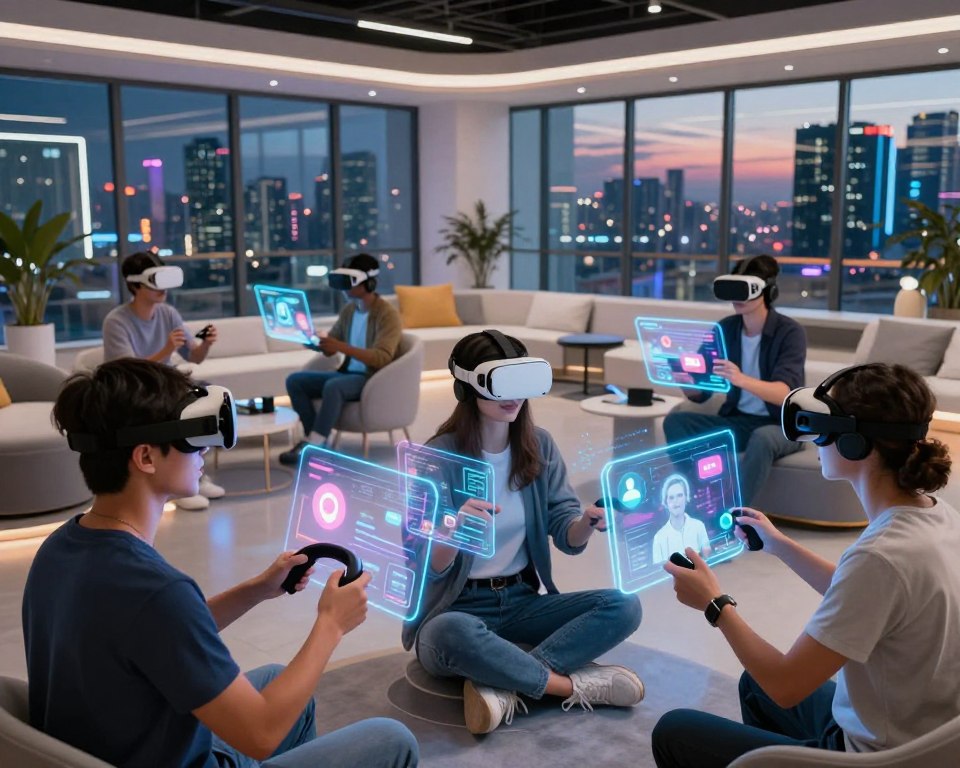
The move away from full virtual reality headsets lets people join a virtual world without heavy gear. That change makes social and work interactions feel more natural and less like a tech demo.
Adoption is driven by practical benefits. Users now use these apps for meetings, quick collaboration, and casual hangouts. The result: daily tools that help with work and play.
- Seamless transitions between apps reduce friction for users.
- Smaller, task-focused worlds deliver measurable value.
- Content aims to be useful first, immersive second.
This evolution signals a maturing digital landscape where the focus is on high-quality user experience. As these platforms improve, they will play a bigger role in how people interact with the world and with each other.
Conclusion: A Realistic View Forward
The long experiment in full virtual worlds has given way to careful, measured progress in applied technology and a clearer vision of reality for everyday users.
Today, teams build useful mixed reality features and AI-assisted tools that deliver real value. This approach favors practical design over grand promises and helps users adopt new experiences more comfortably.
The focus on quality content, better safety, and targeted investment means projects must show measurable returns. That makes products easier to trust and easier to scale for work and learning.
In short, the industry learned lessons from early hype and now aims for steady, user-first progress. The path forward is realistic, focused, and promising.