
Anuncios
Ves el mundo a través de conjeturas rápidas que hace tu cerebro. Esas suposiciones te ayudan a actuar con rapidez, pero también te permiten... ilusión óptica Te engañan. Imágenes virales como la del Skye Blue Café Wall muestran cómo los diseños y el contexto pueden influir en tu perspectiva.
Las siguientes secciones te ofrecen una guía clara sobre cómo tu cerebro construye una "mejor suposición" visual y por qué una sola imagen puede desencadenar señales contradictorias. Aprenderás por qué la velocidad y la eficiencia superan la precisión milimétrica, y cómo esto te predispone a ser engañado.
Conectaremos la diversión de la sorpresa repentina con ideas reales de la investigación para que puedas disfrutar del momento y comprender el mecanismo que lo impulsa. Verás cuadrículas, sombras, movimiento sin movimiento, trucos de tamaño, formas ambiguas y confusiones de color explicadas con claridad.
Al final, verás los patrones que producen efectos convincentes. y saber por qué algunas personas todavía “ven” la misma ilusión incluso después de comprenderla.
Por qué a tu cerebro le encantan las ilusiones: un rápido recorrido por tu sistema visual
Tu sistema visual transforma la luz bruta en respuestas rápidas para que puedas moverte sin pausa. Los ojos alimentan al cerebro con ráfagas de datos, y el cerebro llena los vacíos rápidamente. Esta compensación favorece la velocidad sobre una lectura perfecta.
Expectativas de arriba hacia abajo vs. señales de abajo hacia arriba
De abajo hacia arriba La entrada comienza con bordes, contraste y características simples de la retina. De arriba hacia abajo Las expectativas surgen de la memoria, el contexto y lo que esperas ver a continuación.
Las demostraciones clásicas muestran que tu memoria puede reordenar letras o formas para que aún puedas leerlas. Esto significa que algunas partes de tu experiencia son involuntarias y están aisladas del conocimiento abstracto.
Contexto, contraste y los atajos que toma tu cerebro
- El sistema utiliza la luz ambiental y el contraste para evaluar las sombras, por lo que parches idénticos pueden verse diferentes en una imagen.
- Tu cerebro prefiere atajos estadísticos (bordes, sombreado y patrones familiares) para que la profundidad y la forma aparezcan instantáneamente.
- Esos mismos atajos hacen que algunos efectos perduren incluso después de conocer el truco.
La ciencia de las ilusiones de la percepción: qué estudia el campo hoy en día
Los investigadores ahora combinan demostraciones de laboratorio clásicas con formatos de imágenes virales para analizar cómo el sistema visual maneja señales complicadas.
El trabajo de campo mezcla casos históricos, como el rejilla de Hermann y una cuadrícula centelleante, con diseños virales más recientes, como variantes de pared de cafetería y ejemplos dinámicos de Müller-Lyer. Los laboratorios utilizan estímulos controlados para aislar qué características de una imagen hacen que los objetos parezcan desplazados, más oscuros o en movimiento.
Verás trucos de movimiento (deriva periférica y serpientes giratorias) junto con pruebas de luminosidad como la sombra del corrector. Estos ejemplos muestran cómo el contexto, el contraste y las líneas circundantes obligan al sistema a realizar conjeturas rápidas.
Lo que esta investigación le aporta:
- Ejemplos claros de cuando el paralelismo pauta se ven doblados o los tamaños cambian con el contexto.
- Casos que revelan límites en la resolución y el cableado entre personas y pantallas.
- Ideas sobre por qué algunas imágenes se difunden rápidamente en Internet: sorprenden, son fáciles de compartir y funcionan en todas las pantallas.
Con el tiempo, estos estudios ayudan a modelar en qué señales confía más nuestro sistema visual y por qué ciertas imágenes siguen siendo convincentes incluso después de conocer el truco.
Trucos de cuadrícula y contraste que distorsionan lo que ves
Los patrones de cuadrícula muestran cómo los cruces simples pueden engañar a los ojos y hacerles ver cosas que no existen.
La ilusión de cuadrícula de Hermann data de 1870 y produce los clásicos puntos oscuros que parecen aparecer en los cruces. La ilusión de cuadrícula centelleante es una variante moderna que hace que estos puntos parpadeen. Ambos efectos dependen de cómo el sistema visual amplifica el contraste en las intersecciones.
Cómo el contraste crea círculos fantasmas
Campos receptivos y la inhibición lateral exageran las diferencias en los bordes. Este proceso puede hacer que manchas grises idénticas se vean más oscuras cerca de líneas fuertes.
- Compararás la cuadrícula de Hermann y la ilusión de la cuadrícula centelleante para ver por qué aparecen manchas oscuras en las intersecciones.
- El ancho de línea, el espaciado y la textura del fondo cambian la intensidad del efecto.
- Las sombras y los patrones cruzados pueden intensificar el brillo, mientras que las líneas o el color más suaves lo reducen.
| Característica | Cuadrícula de Hermann | Rejilla centelleante |
|---|---|---|
| Señal principal | Intersecciones con líneas de alto contraste | Intersecciones más pequeños círculos o puntos que parpadean |
| Efecto típico | Manchas oscuras estables en la periferia | Puntos oscuros fugaces y brillantes |
| Factores de fortalecimiento | Líneas oscuras y gruesas, espaciado cuadrado | Alto contraste, pequeños círculos añadidos, espaciado nítido |
| Consejo de diseño | Suaviza las líneas para reducir el efecto. | Utilice color o textura para suprimir el brillo. |
Conclusiones prácticas: Al diseñar gráficos, pequeños ajustes en las líneas y el contraste pueden cambiar la percepción que los espectadores tienen de la profundidad y la estructura. Este ejemplo de ilusión de cuadrícula muestra cómo tonos idénticos pueden verse diferentes según el contexto y las líneas cercanas.
Ilusión de la sombra del dado: los cuadrados que comprueban las reglas del contexto
Una sola sombra proyectada en la imagen de Adelson de 1995 hace que dos cuadrados idénticos parezcan sorprendentemente diferentes.
Lo que mostró AdelsonLos dos cuadrados etiquetados como A y B tienen el mismo valor de píxel, pero uno parece más oscuro porque una gran sombra se proyecta sobre el tablero. Ese efecto resalta la constancia de luminosidad de su sistema visual: su cerebro descuenta la sombra y juzga la reflectancia de la superficie.
Cómo se combinan las sombras, la luz y tu sistema visual
Examinarás cómo la sombra proyectada guía a tu cerebro hacia un brillo "correcto". La sombra da lugar a una inferencia: la región más oscura simplemente está bajo menos luz, no es un material más oscuro.
- Verás por qué los cuadrados A y B coinciden en valor de píxeles y aun así se ven diferentes entre sí.
- Los métodos de revelación simples (enmascarar los tonos medios o conectar A y B con una tira) demuestran que son idénticos en la imagen.
- Quita las piezas circundantes o elimina la sombra y la ilusión se derrumba, mostrando qué señales impulsan el efecto.
Llevar: Esta ilusión de contraste no es un error visual. Es una fortaleza. Al asumir una iluminación estable y usar las sombras para inferir el material, la visión ayuda a tomar decisiones fiables en escenas desordenadas del mundo real.
La ilusión de la pared del café: cuando las líneas rectas parecen dobladas
Un patrón de azulejos escalonados puede hacer que franjas perfectamente rectas parezcan inclinadas. Esta clásica ilusión de pared de cafetería se produce cuando los azulejos oscuros y claros se desplazan y separan mediante finas líneas de mortero.
¿Qué crea el efecto? El alto contraste y los separadores estrechos hacen que los detectores de bordes locales registren erróneamente la adyacencia. irradiación El efecto —donde los bloques blancos parecen más anchos que los negros— agrega una sensación de desalineación.
El nombre se remonta al científico Richard Gregory, quien lo descubrió en la fachada de un café de Bristol. Versiones modernas, como la Skye Blue Café Wall de la artista Victoria Skye, muestran el mismo truco con colores y escalas más atrevidos.
- Los mosaicos escalonados hacen que las líneas rectas horizontales parezcan inclinadas sin necesidad de edición posterior.
- Entrecerrar los ojos o dar un paso atrás demostrará que las líneas son realmente paralelas.
- Ajustar el tamaño, la alineación o el contraste de los mosaicos ajusta la intensidad de la ilusión.
Llevar: La pared de la cafetería es un claro ejemplo de cómo la geometría simple, los bordes definidos y el promedio de luminancia local crean una ilusión visual convincente. Colócala en murales, aceras o fachadas de edificios y comprueba cómo pequeños cambios transforman lo que ves.
Cifras ambiguas que cambian tu interpretación
Un solo dibujo en blanco y negro puede alternar entre objetos, mostrando cómo tu mente crea una historia a partir de pistas mínimas. Estas figuras son poderosas porque obligan a tu sistema visual a asignar figura y fondo rápidamente.
Jarrón Rubin: caras o jarrón: tu cerebro elige
El Jarrón Rubin Alterna entre un jarrón central y dos perfiles. Observa los contornos y verás que una lectura predomina. Centra tu atención en las formas exteriores y las caras resaltan.
Conejo-pato y cubo de Necker: multiestabilidad en acción
El dibujo del conejo y el pato de 1892 alterna entre animales con pequeños cambios en la dirección de la mirada. El cubo de Necker carece de pistas de profundidad y alterna entre dos orientaciones 3D.
- Volteos de figura a fondo: El jarrón de Rubin obliga a elegir entre caras y jarrón, mostrando cómo los bordes deciden qué región se convierte en objeto.
- Trucos de atención: Pequeños cambios de enfoque o rastreo interno círculos Puede empujar una lectura a dominar.
- Tamaño y propiedad del borde: El tamaño que aparece de una región y qué bordes “posee” determinan si se lee como primer plano o como fondo.
- Enlace cotidiano: Las señales ambiguas en escenas reales pueden hacer que usted malinterprete los objetos o el espacio por un momento.
Prueba este ejercicio rápido: mira fijamente el límite entre el blanco y el negro durante diez segundos y luego aparta la mirada. Verás cómo pequeños cambios en la mirada y la atención cambian el resultado final. interpretación.
Para ver más ejemplos de esta clase de imágenes, consulte un imagen ambigua Galería que muestra muchos casos clásicos.
Errores de juicio sobre tamaño y longitud que parecen innegables
Las señales circundantes (aletas, rieles o círculos cercanos) cambian el tamaño en que se ven las cosas. Estos efectos muestran que el contexto puede hacer que marcas iguales parezcan diferentes, incluso cuando las mides.
Müller‑Lyer: puntas de flecha que “estiran” segmentos
El ilusión de Müller-Lyer Pone dos segmentos idénticos uno al lado del otro y añade puntas de flecha opuestas. Uno parece más largo, aunque ambos coinciden exactamente. Las demostraciones dinámicas con puntas de flecha móviles demuestran que los segmentos permanecen iguales: el contexto impulsa el cambio.
Prueba la variante de las líneas rojas: al cambiar las aletas, la longitud percibida cambia. Esto demuestra cómo tu cerebro usa señales locales para calcular la longitud.
Ebbinghaus: cómo los círculos cambian la escala de un objetivo
El efecto Ebbinghaus coloca un círculo objetivo fijo junto a círculos circundantes más grandes o más pequeños. El objetivo parece crecer o encogerse sin que se produzcan cambios en los píxeles. Este es un claro ejemplo de cómo las formas cercanas alteran el tamaño percibido.
Ponzo: rieles convergentes que añaden profundidad
En la ilusión de Ponzo, dos segmentos horizontales idénticos se sitúan entre líneas convergentes. El segmento superior parece más largo porque esos rieles sugieren profundidad. El sistema visual interpreta la parte superior como más lejana y luego la amplía.
- Pruebas rápidas: enmascarar los alrededores o superponer una regla sobre la imagen para confirmar la igualdad.
- Compare las líneas rojas con diferentes aletas para ver el efecto Müller-Lyer en acción.
- Aislar el círculo objetivo para colapsar el efecto Ebbinghaus.
- Observe cómo los pasillos o las carreteras utilizan las mismas señales y pueden engañar a sus juicios de tamaño en la vida real.
Llevar: Incluso cuando las líneas horizontales se leen igual en una herramienta, aún puede "ver" una discrepancia. Use el aislamiento y la medición para eliminar el contexto engañoso y obtener el tamaño real.
Ilusiones de movimiento sin movimiento
Cuando una imagen fija parece fluir, tus ojos y tu cerebro están realizando un pequeño y rápido baile.
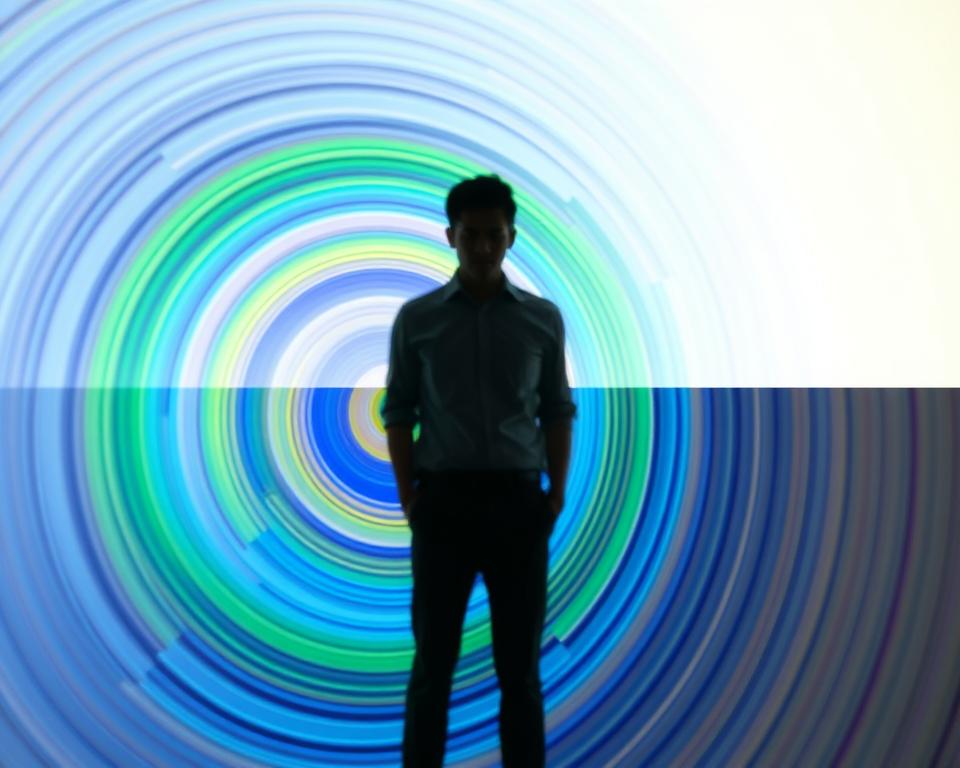
Por qué el arte estático puede parecer que se mueve
Deriva periférica Y las serpientes giratorias de Akiyoshi Kitaoka muestran cómo pequeños pasos de luminancia y secuencias de texturas activan detectores de movimiento. El efecto se intensifica al mover la mirada.
“Faubert y Herbert (1999) vincularon el efecto de deriva periférica con el movimiento ocular y pequeñas diferencias de luminancia”.
Rice Wave, Tilted Road y consejos para ver
La Onda de Rice utiliza sombreado para que el cerebro lea un flujo de movimiento. Aproximadamente una de cada veinte personas no ve ese movimiento.
La Carretera Inclinada presenta dos fotos idénticas una al lado de la otra. Las señales de profundidad divergentes, provenientes de las líneas y la luz, hacen que las carreteras parezcan inclinadas.
- Amplificarás la ilusión escaneando, parpadeando o desviando la atención de una punto a otro.
- Intente cambiar la distancia o mantener la mirada durante unos segundos. artículos de segunda clase para aumentar o disminuir el efecto.
- Recuerde: un pequeño movimiento ocular más el contraste local crea un movimiento convincente en una fotografía fija. imagen.
Ceguera inducida por el movimiento: cómo el enfoque hace que los objetos desaparezcan
Fija tu mirada en un verde punto Mientras una máscara giratoria lo rodea, los objetivos estáticos cercanos pueden parpadear. Este es el movimiento inducido por Bonneh. espejismo, una demostración sorprendente de cómo compiten la atención y el entorno en movimiento.
Después de unos 10 artículos de segunda clase de fijación constante, los elementos periféricos a menudo desaparecen. El anillo en movimiento domina tu visión. sistema, suprimiendo las señales constantes para que las partes estáticas desaparezcan de la conciencia.
Pruebe variaciones En velocidad y contraste para ver cómo el efecto Cambios. Las máscaras más rápidas o el alto contraste suelen aumentar la desaparición. Movimientos oculares breves o un parpadeo suelen restablecer la escena y traer de vuelta los objetivos.
- Verás cómo los objetivos se desvanecen y reaparecen como si parpadearan.
- La fijación sostenida hace que el movimiento prevalezca sobre los elementos periféricos estables.
- La demostración se basa en una ponderación neuronal que favorece la novedad y el cambio por sobre las señales constantes.
“La ceguera inducida por el movimiento demuestra que lo que notas depende de la atención, no sólo de la imagen en sí”.
La percepción del color bajo presión: el debate sobre el vestido
A veces, tu suposición sobre la fuente de luz cambia todo lo que crees ver. La foto de 2015 de un vestido de Roman Originals dividió a los espectadores en dos bandos: los que vieron oro blanco y los que vieron negro y azul.
Los neurocientíficos Bevil Conway y Jay Neitz argumentaron que diferentes suposiciones sobre la luz—luz diurna versus luz interior— explican la división. Tu cerebro Descuenta la iluminación inferida, por lo que píxeles idénticos pueden leerse como colores diferentes.
¿Blanco y dorado o negro y azul? La suposición de tu cerebro a la luz del día.
Este caso es claro ejemplo de la constancia del color en acción. El fabricante confirmó posteriormente que el vestido es negro y azul, aunque muchos aún ven oro blanco. Esto demuestra la fuerza del contexto y de las pequeñas señales como sombra y el resplandor guía tu lectura.
- Revisarás cómo el descuento en la iluminación cambia lo que ves.
- El contraste y los sutiles indicios sobre la fuente de luz impulsan al espectador a una única lectura.
- Es un recordatorio de que las disputas por el color entre gente A menudo se deben a suposiciones diferentes y no a exhibiciones erróneas.
“El debate sobre la vestimenta se convirtió en una ilusión óptica histórica porque expuso cómo las suposiciones sobre la iluminación influyen en los juicios de color”.
Objetos imposibles y perspectiva paradójica
Algunas obras de arte crean formas que tienen un sentido local perfecto pero no pueden existir como un todo. El triángulo de Penrose es un caso clásico: cada esquina luce bien, pero las tres juntas rompen las reglas del 3D. Lionel Penrose lo popularizó en la década de 1950, aunque diseños anteriores como el triángulo de Reutersvärd allanaron el camino.
Triángulo de Penrose y espacios escherianos
M. C. Escher, el artista creador de Relativity y Belvedere, demostró cómo el minucioso detalle puede ocultar contradicciones globales. Organiza escalones, ventanas y líneas de forma que la interpretación favorezca contornos suaves y conectados.
- Verá cómo los bordes y líneas localmente consistentes contradicen la geometría 3D.
- Pequeños cambios o movimientos de la cámara a menudo arruinan el truco y revelan un objeto normal.
- Estos diseños enseñan que el sistema visual une escenas a partir de señales locales sin comprobar la coherencia global.
| Característica | Triángulo de Penrose | Obras de Escher |
|---|---|---|
| Señal principal | Uniones consistentes localmente | Repetición de conexiones imposibles |
| Cómo te engaña | Los bordes implican una profundidad que no se puede cerrar. | Las escenas locales se unen para formar un todo paradójico |
| Rompe el efecto | Mover el punto de vista o la cámara | Cambiar escala o agregar movimiento |
Lista de verificación rápida Para detectar trampas de perspectiva: sigue una sola línea a lo largo de la forma, presta atención a los cambios bruscos de profundidad y muévete de lado a lado. Así podrás disfrutar del arte paradójico y comprender por qué se siente tan real.
De las pantallas a las calles: lugares cotidianos donde aparecen ilusiones
El diseño urbano toma prestadas las mismas recetas de imágenes que engañan a los espectadores de laboratorio y las colocan en aceras, paredes y señales. Comenzarás a ver trucos familiares una vez que sepas qué buscar.
Muros de cafetería, cruces peatonales, murales y letreros móviles
El término ilusión de pared de cafetería Se remonta a la fachada de un café de Bristol que Richard Gregory usó para dar nombre al efecto. Ahora aparecen variantes en azulejos urbanos, líneas de cruces peatonales y murales públicos.
Verá lechada o mortero recto que parece inclinado cuando las baldosas están descentradas. Los diseñadores aprovechan el contraste y las líneas cortas y repetidas. pauta para sugerir inclinación o profundidad. Esa misma fórmula aparece en los cruces peatonales pintados que parecen flotar sobre la carretera.
Las vallas publicitarias digitales y los letreros animados pueden superponer patrones para crear una sensación de movimiento. Estos trucos visuales atraen la atención y guían. gente a través del espacio, pero también pueden distraer cuando se usan cerca de intersecciones concurridas.
Qué tener en cuenta: El ángulo y la distancia de la cámara cambian la interpretación de una imagen. De cerca, el efecto puede desaparecer; en una foto, puede intensificarse. Piense en la seguridad y la ética: un diseño lúdico puede ser atractivo, pero nunca debe poner en peligro a peatones ni conductores.
Recorre tu vecindario y compara lo que ves con las recetas de las secciones anteriores. Estarás listo para señalar una pared ingeniosa. espejismo y explicarles por qué funciona a mis amigos amantes de las ilusiones ópticas.
Lo que las ilusiones revelan sobre tu cerebro
Lo que a primera vista parece obvio puede revelar los atajos de los que depende tu cerebro. Muchos efectos persisten porque el cableado visual temprano se rige por reglas rápidas que el conocimiento superior no puede reescribir instantáneamente.
Por qué conocer el truco no cancela el efecto
Su cerebro Utiliza filtros automáticos para que las escenas sean estables y útiles. Estos filtros actúan antes de que el pensamiento consciente se active, por lo que la consciencia suele llegar demasiado tarde para detener la ilusión.
Serpientes giratorias o los dibujos ambiguos todavía se sienten reales porque los canales de bajo nivel siguen informando las mismas señales a pesar de sus comentarios.
Centro versus periferia: el movimiento ocular importa
La visión central enfoca los detalles; la visión periférica enfatiza el movimiento y el contraste. Estos canales separados pueden discrepar, produciendo un movimiento vívido en el borde del campo de visión, mientras que el centro permanece estable.
Pequeños movimientos sacádicos, parpadeos o un cambio rápido de mirada pueden restablecer o amplificar un efecto. Por eso, una segunda mirada suele corregir un juicio precipitado.
| Factor clave | Visión central | Visión periférica |
|---|---|---|
| Papel principal | Detalle, identificación de objetos | Movimiento, amplio contraste |
| Fuerza típica | Alta resolución para objetos | Sensible a pequeños pasos de luminancia y flujo. |
| Cómo cambian los movimientos de los ojos | Las sacadas mejoran la claridad | Los cambios amplifican la deriva y el movimiento aparente |
Llevar: Lo visual sistema Busca velocidad y estabilidad, no precisión perfecta. Usa comprobaciones medidas (mide, enmascara o mueve la mirada) cuando la lectura correcta sea importante.
Prueba esto: cómo ver ilusiones para obtener el máximo efecto
Algunos movimientos sencillos (entrecerrar los ojos, dar un paso atrás o parpadear) le ayudarán a comprobar lo que realmente muestra una imagen. Estas comprobaciones rápidas revelan si el contexto o la geometría impulsan la lectura. Úsalas antes de decidir qué ver.
Entrecerrar los ojos, dar un paso atrás y cambiar la mirada
Entrecierra los ojos o mira de lado para verificar que las bandas de la pared de la cafetería estén rectas. Entrecerrar los ojos reduce los detalles de alta frecuencia y permite ver la alineación real.
Retroceda o mire desde diferentes alturas. La distancia suele reducir el contraste local, de modo que se puede ver que las líneas curvas son en realidad paralelas.
Desplaza la mirada entre el centro y los bordes. Intenta alternar el enfoque para sentir cómo aumenta la deriva periférica con pequeños movimientos oculares y parpadeos.
Consejos de sincronización: segundos que hacen que el efecto destaque
Mantenga la fijación firme durante aproximadamente 10 segundos Para activar la ceguera inducida por movimiento en muchas demostraciones. Esa breve espera a menudo hace que los objetivos periféricos se desvanezcan.
Utilice tres ejercicios sencillos de sincronización: mantener pulsado, parpadear y escanear. Cada uno requiere solo unos minutos. artículos de segunda clase y le ayuda a probar qué señales importan.
- Trucos rápidos: entrecerrar los ojos, mirar de lado o enmascarar los mosaicos circundantes para aislar el contexto.
- Impulsar el movimiento: escanear, parpadear y cambiar la mirada para amplificar la deriva periférica y los efectos de serpiente giratoria.
- Consejos sobre el dispositivo: Aumente el brillo o el contraste de la pantalla si imagen Parece apagado; eso puede agudizar el efecto.
- Compartir de forma fiable: Cuéntaselo a otros gente para probar la misma distancia y el mismo tiempo para replicar su resultado.
Mini manual: Dedica un minuto a cada demostración (entrecierra los ojos, retrocede un paso, mantén la mirada fija) y luego compara tus notas. Verás cómo las acciones breves cambian lo que el cerebro informa y por qué... espejismo Puede sorprender a diferentes espectadores.
Mapa de palabras clave: cómo esta lista se dirige a su intención de búsqueda
Utilice este mapa de palabras clave para acceder directamente a las demostraciones y los términos que la mayoría de los lectores buscan.
Encontrarás temas centrales:pared del café, sombra de damero, familias de ilusión de cuadrícula y Müller-Lyer, claramente vinculados a encabezados y ejemplos. Esto facilita la localización de la demostración exacta que buscaba.
Temas centrales y dónde aparecen
- pared del café/ ilusión de pared>: la demostración de la pared del café y los ejemplos urbanos muestran efectos de alineación y contraste.
- Sombra de corrector: cubre la prueba de constancia de luminosidad de Adelson y cómo las sombras cambian los juicios.
- Ilusiones de cuadrícula: Hermann y las entradas de cuadrícula centelleantes explican el contraste y el brillo de los puntos.
- Los clásicos de tallas grandes de Müller‑Lyer: Ebbinghaus y Ponzo aparecen en la sección de tallas y longitudes.
Términos relacionados utilizados de forma natural
La guía incorpora sistema visual, contraste, y movimiento ocular Donde se aclaran los mecanismos. Esto facilita la búsqueda de información sobre mecanismos y nombres de demostración.
| Consulta de búsqueda | Dónde leer | Por qué coincide |
|---|---|---|
| pared de cafetería / ilusión de pared | Sección de pared del café + ejemplos urbanos | Muestra desplazamiento geométrico, contraste y observaciones prácticas. |
| sombra de damas | Sección de sombra de Checker | Explica la constancia de la ligereza y sus revelaciones prácticas. |
| ilusión de cuadrícula | Trucos de cuadrícula y contraste | Compara los efectos de Hermann y de rejilla centelleante |
| Müller‑Lyer | Errores de cálculo en cuanto a tamaño y longitud | Demuestra aletas, contexto y consejos de medición. |
Cómo te ayuda esto: Los encabezados y enlaces internos reflejan las rutas de búsqueda habituales, lo que permite buscar respuestas rápidas o profundizar en el mecanismo y las demostraciones reales. La guía también abarca temas de movimiento y color, por lo que satisface la amplia curiosidad sobre los efectos ópticos y la ciencia relacionada.
Conclusión
Has aprendido los trucos visuales; ahora puedes capturarlos en fotografías, murales o con una mirada rápida a la calle.
Cada demostración, desde cuadrículas y sombras hasta movimiento y color, muestra cómo el contexto guía una lectura rápida de un texto. imagenViste por qué una sombra proyectada cambia dos cuadrados idénticos y por qué una imagen fija puede parecer moverse.
Recuerda estas breves recomendaciones: los patrones de cuadrícula pueden generar puntos fantasma, las señales de tamaño distorsionan los juicios y los dibujos ambiguos cambian de lectura. Prueba un truco con un amigo y compartan la sorpresa.
Estas ilusiones ópticas convierten escenas cotidianas en una breve lección. Sal a caminar, señala un mosaico o mural ingenioso y disfruta de cómo pequeños cambios revelan las reglas detrás de lo que ves.